- by foxnews
- 06 Apr 2026
GREGG JARRETT: Trump's birthright citizenship order meets a wary SCOTUS audience
The Supreme Court weighs whether the 14th Amendment grants citizenship to U.S.-born children of undocumented immigrants, with a ruling potentially expected by June.
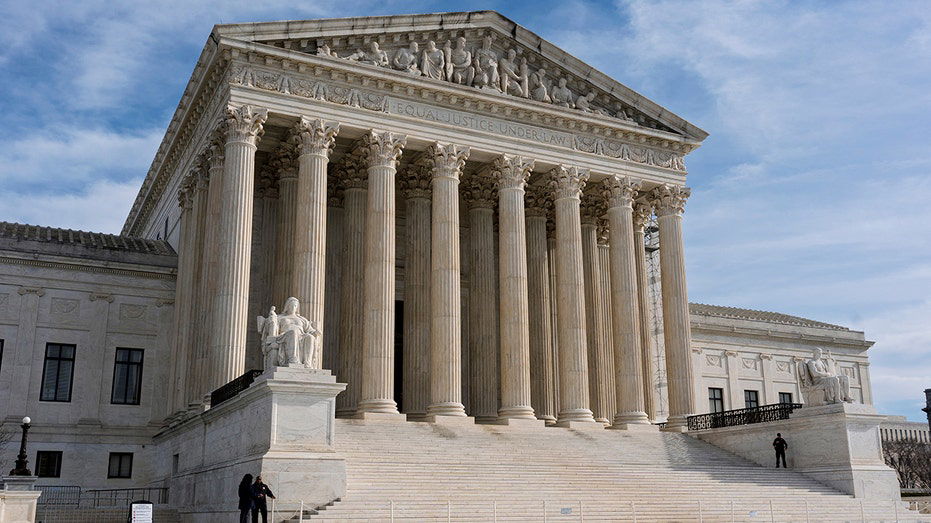
Sauer was an impressive advocate with a masterful command of the law and history. However, he faced a level of skepticism from a majority on the court which suggests that, in the end, Trump's executive order may be struck down.
Granted, divining an outcome based solely on oral arguments can be equivalent to reading tea leaves. The dynamic could change behind closed doors and upon further deliberations. But it cannot be overlooked that even conservative justices at the hearing posed penetrating questions that seemed to manifest their doubt.
ACLU Attorney Cecillia Wang argued in defense of broad birthright citizenship. She, too, faced challenging questions, albeit with a far more conciliatory tone that appeared to betray the eventual result.
As expected, much of the discourse centered on the 14th Amendment, ratified in 1868, three years after the Civil War ended. The central objective was to grant citizenship to formerly enslaved people and their children:
"All persons born or naturalized in the United States, and subject to the jurisdiction thereof, are citizens of the United States and of the State wherein they reside."
But what did the framers intend when they inserted the operative phrase, "subject to the jurisdiction thereof?" Those five words consumed a good deal of the high court's discussion on Wednesday.
Exhibiting his knowledge of the 1866 debate, Sauer referred back in time to the sponsors of the amendment, who explained that it meant full and complete allegiance to the U.S. and "not owing allegiance to any foreign power."
Sauer quoted Sen. Lyman Trumbull, a moving force behind the 14th Amendment, who specifically stated that the citizenship clause does not encompass individuals still subject to any foreign power or "owing allegiance to anybody else."
However, the justices seemed unmoved by the notion that citizenship should not apply to the children of people who broke the law coming here and have no permission to be in the U.S.
Nevertheless, the justices expressed reservation that the Ark case could be used as a primary basis for excluding citizenship to the offspring of unlawfully present parents who are subject to deportation.
For at least a century, our government has been granting citizenship based on a perception of the 14th Amendment that Sauer described as "a long-enduring misconception." Forgotten over the years was the original intent of the authors and the vital context of the congressional debate. No one who helped craft the amendment argued that citizenship should be given to children of illegal immigrants.
Yet, the current case may be one of those instances in which an established norm or accepted practice compounded by the complexity of reversing course creates too great an obstacle. Justice Amy Coney Barrett wondered how an endless array of cases would be adjudicated if the court upheld Trump's order. Still another justice raised the thorny question of a humanitarian dilemma.
But given the chronic stasis that persists on Capitol Hill, no one should be optimistic that it could happen anytime soon.
you may also like


- by foxnews
- 06 Apr 2026
Philadelphia man stabs Planet Fitness worker after getting banned from gym: police


travel
- by foxnews
- descember 09, 2016
Archaeologists find 2,100-year-old bullet that sent 'sarcastic' message to enemy forces
A rare 2,100-year-old sling bullet inscribed in Greek with the sarcastic advice to "learn" was discovered by archaeologists at ancient Hippos in Israel.
read more