
- by foxnews
- 26 Aug 2026
Trump to honor Artemis II astronauts who traveled farther from Earth than any humans in history
President Donald Trump will award the Congressional Space Medal of Honor to the Artemis II crew at NASA's Johnson Space Center in Houston on Aug. 28.
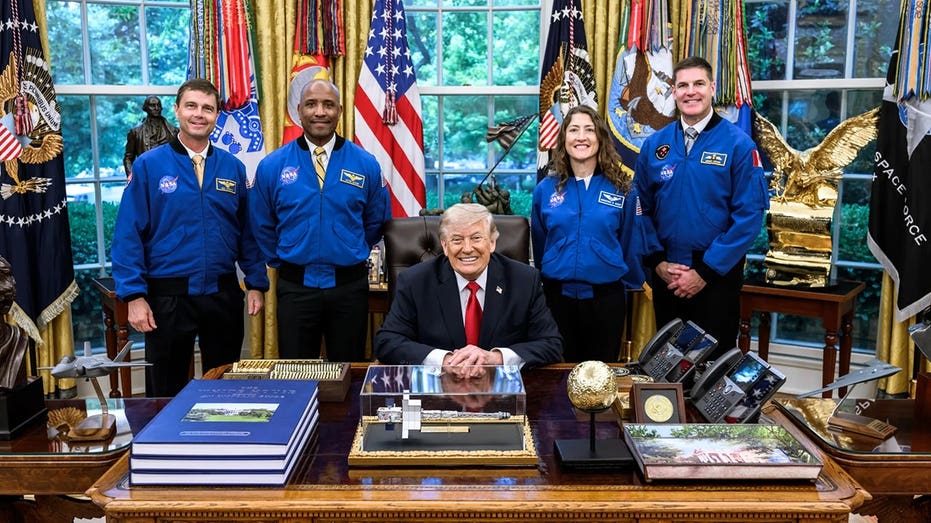
The four made history in April aboard Artemis II, the first crewed flight of NASA's Orion spacecraft and the first mission to take astronauts around the moon in more than half a century.
At their farthest point, the crew traveled 252,756 miles from Earth, surpassing the human spaceflight distance record set by Apollo 13 in 1970, according to NASA. The astronauts covered 695,081 miles during their nearly 10-day mission.
Their voyage began April 1, when NASA's Space Launch System rocket lifted off from Kennedy Space Center in Florida with 8.8 million pounds of thrust. After testing Orion's systems in space, the crew headed toward the moon and passed within 4,067 miles of the lunar surface during an April 6 flyby, NASA said.
The astronauts captured more than 7,000 images along the way, including views of earthrise and earthset, lunar craters, ancient lava flows and a solar eclipse seen from Orion. NASA said the crew also reported meteoroid impact flashes on the moon's night side.
Orion returned to Earth on April 10, entering the atmosphere at roughly 25,000 mph before splashing down in the Pacific Ocean off California.
NASA Administrator Jared Isaacman said after the crew's return that the astronauts had accepted "significant risk" while testing the spacecraft and systems intended to carry future crews deeper into space.
The medal they will receive has roots in the Apollo era. Congress authorized the Congressional Space Medal of Honor in 1969, declaring that America's space program relied on the "intelligence, the dedication, the bravery, and the self-sacrifice" of astronauts who flew missions into the "hostile environment of space."
NASA says the medal has been awarded to only a "very select group" of astronauts. Its official list includes 30 recipients, among them Neil Armstrong, John Glenn, Alan Shepard and Apollo 13 commander Jim Lovell. Armstrong was among six astronauts who received the medal from President Jimmy Carter on Oct. 1, 1978, according to NASA.
Artemis II also served as a stepping stone toward returning astronauts to the lunar surface. NASA said the crew tested Orion's life-support systems, manually piloted the spacecraft and gathered data intended to prepare for future missions.
"The NASA leadership team was in Mission Control, alongside the flight control team, watching as the Artemis II crew crossed that historic threshold and became the explorers that ventured farthest from Earth," NASA Administrator Jared Isaacman said to Fox News Digital in a statement.
"Certainly, the astronauts were aware and monitoring their spacecraft systems. Under President Trump's leadership, Artemis II captivated the world, inspired a generation, and gave us the confidence to press on as America returns to the Moon to build a base and to stay. Artemis III is the next mission up in that campaign, but it will be in 2028 during Artemis IV, when NASA astronauts will once again walk on the Moon."
The White House did not immediately respond to Fox News Digital's request for comment.
you may also like



travel
- by foxnews
- descember 09, 2016
Ancient clue cracks open a 2,000-year-old mystery near famed Colosseum
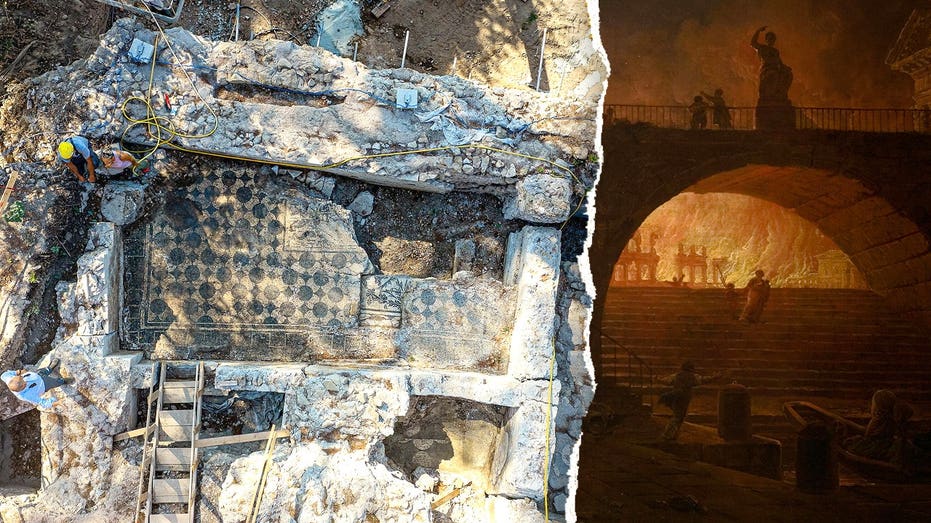
Archaeologists working near Rome's Colosseum uncovered eight rooms with mosaics and painted decorations that may belong to an ancient Roman firehouse.
read more